top of page
Search

Black Culture is alive and well---somewhat

  • Writer: Y's Becoming
    Y's Becoming
  • Jun 22
  • 5 min read

At last week's Jackson House fundraising event I learned that Central Ave in Tampa was considered the Harlem of the South.


Mind = Blown.


Because that spot right there? As it is today? How? When? Because the infestation of gentrification did what it came to do....and I guess its death knell rang in the echo's of Harlem cultural dissipation in NYC (disclaimer: Harlem is still there of course, just nowhere near what it used to be before the floods came in....)


Unfortunately, all of it makes sense.


A lot of Black spaces that were formed out of necessity due to segregation started dying off not soon after the Civil Rights Act. Not because they weren't worthwhile but because many of the leaders driving it passed on to glory or assumed "equality" was the point and it would lead to some kind of American utopia; and then a lot of Black issues became economic class issues and those that pushed beyond the barrier weren't as exposed to the issues of those still in poverty. And that disconnect still happens today.


Although Black music (NOT just hip-hop), fashion, art, literature is still alive and well today, it's not as centralized as it was back in the day, and it takes more effort in my opinion to consume and connect the dots.

What's wild is that Black folks were willing participants in their own demise. In the desire to assimilate and prove their worthiness to be in White spaces, we abandoned our souls and what made us unique. And today, much (not all) of what is seen from Black culture collectively only highlights what's morally reprehensible--but that's what happens when a child is neglected, they aren't raised to know better and the rest of society suffers for it.


Yes, Black Excellence still exists -- we are doctors, lawyers, entrepreneurs, scientists, inventors, and so many great things. But what used to centrally connect us has fallen by the wayside -- black owned entertainment television (BET), Jet Magazine, historical black newspapers: Atlanta Daily World (1931-2003); Chicago Defender (1910-1975); New York Amsterdam News (1922-1993); Norfolk Journal Guide (1916-2003); Philadelphia Tribune (1912-2001) and Pittsburgh Courier (1911-2002). Their demise occurred when reigns were handed to those who didn't support the culture (ahem: who wanted to control the narrative), and the fall of print media in the age of the internet drove the nail into the coffin.


Today, a lot of what continues to drive Black culture-- the version that is not reduced to the crime rates that online racists are always quoting or the bonnets & booty shorts seen on social media--is Historically Black Colleges & Universities (HBCU) and the Black fraternities and sororities. It will always be one of my life's regrets that I didn't attend a HBCU. My thoughts on Black fraternities and sororities are best left for another post....


While I am certainly not anti-integration or anti-American....I absolutely support the importance of cultural preservation. I yearn for Black culture that doesn't exist solely to prove itself worthy of the White gaze or that uses its story lines and poetry stanzas to delineate its pain from White rejection; but simply Black culture that exists for culture's sake and is used to uplift, to inspire, and it continues to tell our story.


In Christian circles, its often touted that Christians must choose Christ over culture. And I absolutely agree with that. Christ is above all and our true identity is found in HIm. But make no mistake, during His life on earth, Jesus was a Jew and He participated in Jewish customs and traditions just like all Jews--He just didn't put the laws/traditions of man above God. And it's the same circumstances within Black culture. No, I will not support or advocate for anything that goes against God (which is why much of hip-hop isn't for me---lyrics and behaviors that promote sexual immorality, drug use, and crime are a hard pass); however, the spark of creativity that exists within all human beings comes from God and to not use those gifts and talents is a disservice and dishonor to the Most High. God asks us to let go of sin, but he does not ask us to erase what he put in us to be accepted.


Culture itself isn't inherently evil and Black American people (those that are descended from the United States') have a distinct culture that is known and felt around the world.


For my own peace and comfort, I'm going to post a few Black artists, authors, professors, and business people who continue to keep Black culture alive, acknowledging the past, celebrating the present, and promoting hope for the future. By no means is it an exhaustive list. Just a taste to whet the appetite!

Jazz bassist, singer, and songwriter Esperanza Spalding is renowned for her avant-garde style and ability to transcend genres.
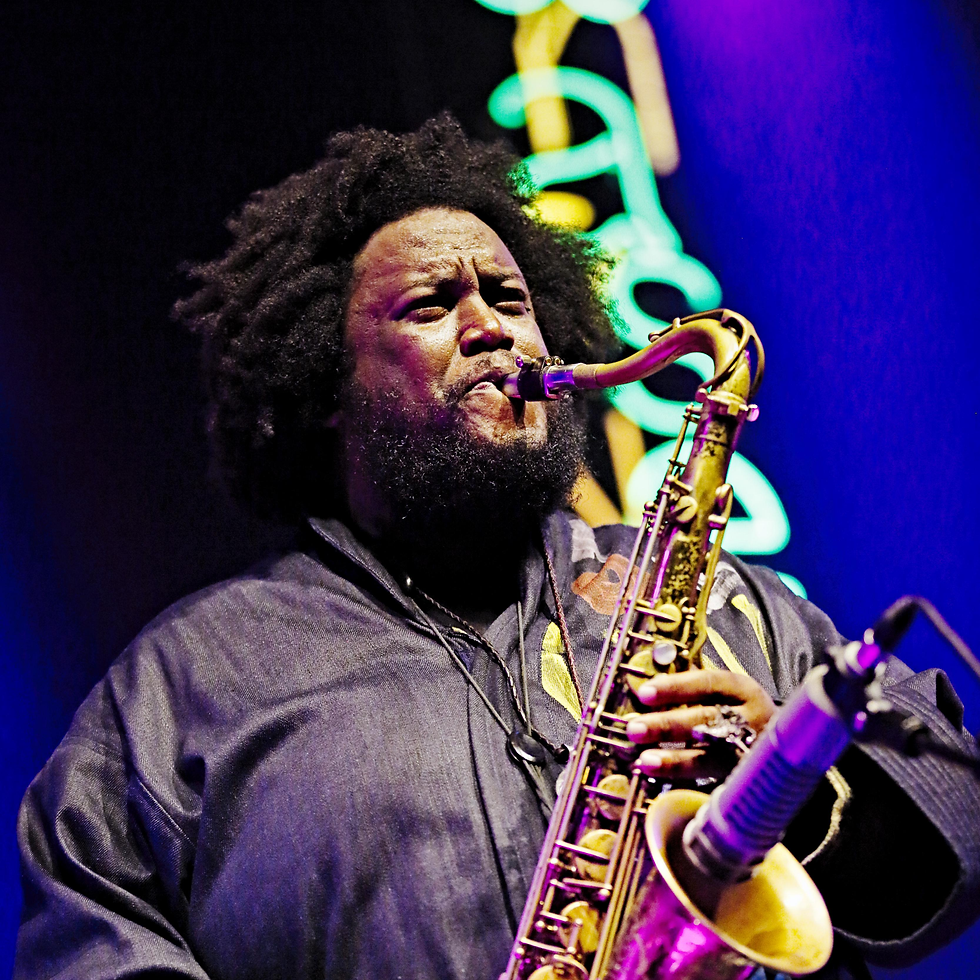
American jazz saxophonist, composer, and bandleader Kamasi Washington is renowned for his innovative contributions to contemporary jazz. His unique blend of jazz, funk, classical, and hip-hop influences may be heard on several of his solo recordings
Jesmyn Ward is an American novelist and a professor of English at Tulane University, where she holds the Andrew W. Mellon Professorship in the Humanities. She won the 2011 National Book Award for Fiction for her second novel Salvage the Bones, a story about familial love and community in facing Hurricane Katrina. She won the 2017 National Book Award for Fiction for her novel Sing, Unburied, Sing.
James McBride is an American author, musician, and screenwriter whose works blend history, culture, and humor to explore race and identity. His memoir The Color of Water sold over 2 million copies, and his novel The Good Lord Bird won the 2013 National Book Award. Other acclaimed works include Deacon King Kong and The Heaven & Earth Grocery Store, the latter winning multiple awards in 2023-24. He is also a distinguished tenor saxophonist and composer.
Ya La’ford is a visual artist based in St. Petersburg, near Tampa Bay in Florida. La’ford has worked for Maya Angelou and her art is part of the permanent collection of the Bill & Melinda Gates Foundation.
Zulu Painter’s work celebrates life and utilizes vibrant color. Zulu creates large scale murals, art installations and fabrications across the United States.

David Steward, co-founder and chairman of World Wide Technology (WWT), is recognized as the wealthiest Black person in America. World Wide Technology started in 1990 when he used his $250,000 initial investment to create the company. Over the years, the company has grown into one of the largest IT service providers, boasting clients like Apple, Microsoft, and the federal government.

As founder and CEO of Vista Equity Partners, Robert F. Smith dedicates his expertise to enterprises based on software technologies.
Bryan Allen Stevenson is an American lawyer, social justice activist, and law professor at New York University School of Law. He is also the founder and executive director of the Equal Justice Initiative. Based in Montgomery, Alabama, he has challenged bias against the poor and minorities in the criminal justice system, especially children.
The Honorable Shirley Ann Jackson, PHD, is an American physicist, and was the 18th president of Rensselaer Polytechnic Institute. She is the first African-American woman to have earned a doctorate at the Massachusetts Institute of Technology in Theoretical Elementary Particle Physics, and the first African-American woman to have earned a doctorate at MIT in any field. She is also the second African-American woman in the United States to earn a doctorate in physics.

cul·ture

[ˈkəlCHər]

noun

verb

  1. the arts and other manifestations of human intellectual achievement regarded collectively:

    "20th century popular culture"

    Similar:

  2. the customs, arts, social institutions, and achievements of a particular nation, people, or other social group:

    "Caribbean culture"

    "people from many different cultures"

    Similar:


Comments


bottom of page